Skip to content

Active leak response for Houston commercial roofs during heavy rain. We trace water entry, stabilize the source, and make durable repairs after Gulf Coast downpours.

Schedule a Roof Review

  • When the rain is still falling and the roof is letting it in
  • An active leak during a heavy Houston downpour is a different problem from a stain you find on a dry day. Water is moving, the building is occupied, inventory and equipment are exposed, and the source is almost never directly above the spot where it drips. We respond to live, rain-driven leaks on commercial buildings by getting water out of the interior, finding where it is actually entering, and stabilizing that entry point so the leak stops growing while the weather is still working against the roof.
  • The Gulf Coast produces the kind of rain that exposes every weakness in a low-slope assembly. A slow front can drop several inches over a day, and a tropical system can deliver a year's worth of stress in an afternoon. A roof that handles ordinary showers without complaint will show its real condition under that volume, which is why leaks here tend to appear suddenly and severely rather than as a gradual nuisance.
  • Water travels, so we trace it instead of guessing
  • The most common mistake in leak repair is treating the drip location as the leak location. On a commercial roof, water enters at a failed seam, flashing, or penetration, runs along the underside of the membrane or across the deck, follows structural members, and emerges through the ceiling somewhere else entirely. Sealing the ceiling-side symptom does nothing if the entry point is twenty feet uphill.
  • Our response starts by separating where the water shows up from where it gets in. We work back from the interior evidence to the roof, reading the slope, the deck framing, and the path the water most likely followed, then concentrate on the details that fail first under rain load.
  • The details that let rain in first
  • Open or split seams in single-ply membrane, where adhesive or welds have aged or were never fully bonded
  • Flashings at parapets, walls, and curbs that have pulled away, cracked, or lost their termination seal

Roof planning guidance

Penetrations around pipes, conduit, drains, and HVAC curbs where the sealant or boot has failed Edge metal and coping joints that channel wind-driven rain behind the membrane Failed or undersized drains and scuppers that let water back up and find seams it would never reach at lower levels

Schedule a roof review
Rain-Driven Roof Leak Response | Houston, TX Commercial
Downtown Houston commercial rooftops

Wind-driven rain finds paths that vertical rain never touches

Houston rarely gets rain that falls straight down. Storms come with wind, and wind-driven rain is pushed sideways and upward against vertical surfaces, where it gets behind counterflashing, under edge metal, and through gaps that shed water fine in a calm shower. A roof can pass every ordinary rain and still leak badly the moment a storm drives water horizontally into a parapet or a poorly terminated flashing.

We account for that when we trace a storm-related leak. A leak that only appears with wind out of a particular direction points us at the windward flashings and edge details rather than the open field, and that distinction saves time when the building is taking on water and the source needs to be found fast.

Houston Energy Corridor commercial buildings

Drainage backups turn a small problem into a big one

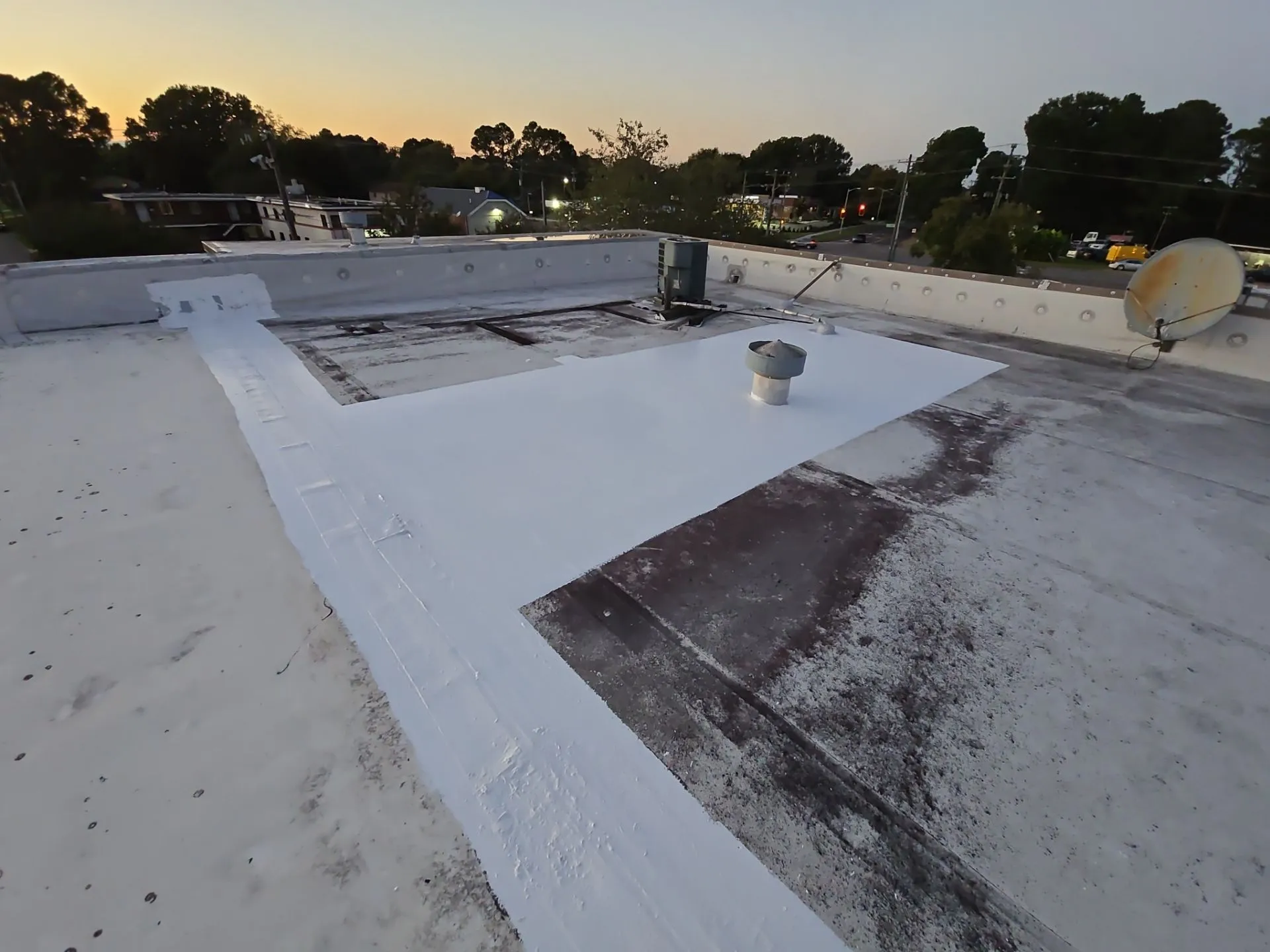
A clogged drain is one of the most damaging leak sources on a flat Houston roof, precisely because it changes the water level across the whole deck. When an internal drain chokes on storm debris or a strainer fills with leaves and gravel, water rises around the drain and across low areas of the roof, and that rising water reaches seams and flashing terminations that are perfectly sound at normal flow. The leak isn't a hole; it's a water level the roof was never meant to hold.

During an active-rain response we check the drains and overflow paths early, because clearing a backed-up drain can drop the water level and slow an interior leak immediately. We confirm that internal drains are flowing, that overflow scuppers and secondary drains are open, and that storm debris washed onto the roof isn't migrating back toward the outlets we just cleared.

Roof planning notes

Stabilize first, repair right

Talk with a Houston commercial roofing team

Immediate stabilization

Stopping the immediate intrusion and making a lasting repair are two different jobs, and rain-driven leaks usually require both. When water is actively coming in, the first priority is to halt it and protect the interior. Once conditions allow, we go back and make the repair that actually belongs there. Temporary sealing or patching at the identified entry point to stop active intrusion

Clearing blocked drains and overflow paths to lower standing water

Protecting interior assets and directing water away from electrical and sensitive equipment where it is unsafe to leave it Talk with a Houston commercial roofing team