Silicone Restoration Coatings for Houston Flat Roofs
A silicone coating turns an aging, leaking membrane or metal deck into a seamless, fully adhered surface without the cost and disruption of a tear-off. We spray or roll a high-solids silicone over a cleaned and repaired substrate, building a monolithic film that bonds to nearly any existing roof: built-up, modified bitumen, single-ply, spray foam, and standing-seam metal. For the large flat and low-slope inventory across Greater Houston warehouses, distribution centers off the Sam Houston Tollway, retail boxes, and older office stock around Westchase, that means another decade or more of service life pulled out of a roof that was headed for replacement.
What makes silicone the right tool here, more than anywhere else, is water and sun. Harris County roofs sit under intense Gulf Coast UV most of the year and take heavy, sustained rain during storm season. Silicone is the only common coating chemistry that does not break down when it sits in standing water, and on the dead-flat decks that are everywhere in this region, water sits.
Why Silicone Holds Up to Houston Weather
It survives ponding water
Acrylic coatings re-emulsify and soften when water pools on them for days. After a typical Houston downpour, water can linger in low spots on a flat roof long after the sky clears, especially where the original deck deflected or drains undersized for the rainfall this area gets. Silicone is moisture-cure and hydrophobic; it is unaffected by long-term ponding, which is why we specify it over acrylic on the majority of flat commercial roofs we coat in the metro.
It reflects heat and cuts cooling load
A bright white silicone surface reflects the bulk of incoming solar energy instead of letting the roof absorb it. On a Houston summer afternoon, a dark or weathered membrane can run well over 150 degrees; a reflective silicone roof stays dramatically cooler. That drops the heat pushed into the building, eases the load on rooftop HVAC, and slows the thermal aging of the membrane underneath. For tenants in Energy Corridor offices or refrigerated space near the Ship Channel, lower deck temperatures translate directly into utility savings.
It handles UV without chalking out
Silicone's resistance to ultraviolet degradation is its defining trait. The film holds its reflectivity and flexibility through years of direct sun exposure that would oxidize and embrittle other materials. That longevity is the reason a silicone restoration carries real warranty terms instead of being a short-term patch.
Where a Silicone Coating Makes Sense
We recommend silicone restoration when the roof structure is sound but the surface is worn, granule-depleted, or leaking at seams and details. Good candidates include:
- Aged modified-bitumen and built-up roofs that are weathering but not saturated
- Single-ply membranes near the end of warranty with intact insulation
- Spray polyurethane foam roofs due for their scheduled recoat
- Metal roofs on older industrial and warehouse buildings with seam and fastener leaks
- Roofs with chronic ponding where a tear-off would not fix the underlying drainage
A coating is not a fix for a wet roof. If moisture is trapped in the insulation, we identify it first and address those areas, because coating over saturated material seals the problem in rather than solving it.
How We Apply Silicone on Commercial Buildings
Inspection and moisture survey
Before we quote a coating, we walk the roof and check for trapped moisture using core cuts or an infrared scan after sundown, when wet insulation gives off stored heat. This tells us how much of the deck is genuinely restorable versus how much needs replacement first. Skipping this step is how coating jobs fail.
Cleaning and repair
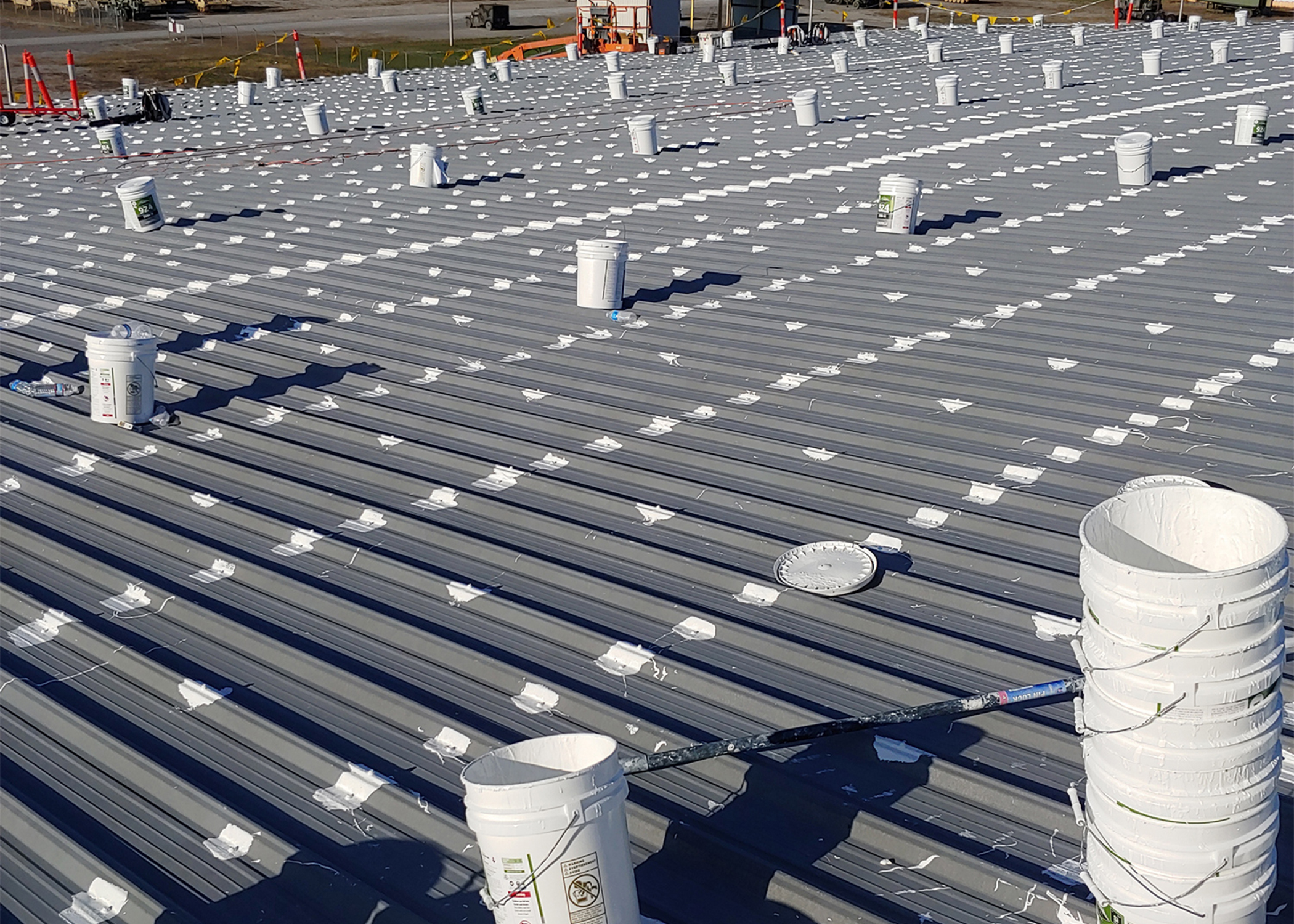
The roof gets power-washed to strip dirt, chalk, and biological growth so the silicone can bond. We then re-secure loose laps, repair splits, and rebuild flashings at curbs, pipes, drains, and parapet walls. On Houston roofs, the perimeter and the dozens of rooftop penetrations around HVAC units are where leaks usually start, so those details get the most attention.
Reinforcing the weak points
Seams, penetrations, and transitions get a reinforcing layer of polyester fabric set into the coating, building extra thickness and tear resistance exactly where movement and water concentrate. Drains and scuppers are detailed to keep water moving toward the building's drainage rather than backing up onto the field.
Base and topcoat
We apply the silicone in passes to a specified dry film thickness, often in a contrasting base and finish color so full, even coverage is visible and verifiable. The result is one continuous membrane with no seams across the entire field, the single biggest reason coated roofs stop the seam-related leaks that plagued the original assembly.
Minimal Disruption to Operations
A coating goes down over the existing roof, so there is no demolition, no torn-open deck exposed to a surprise afternoon thunderstorm, and far less debris and dumpster traffic than a replacement. For a distribution facility moving freight, a medical office near the Texas Medical Center, or a tenanted building in the Galleria area, work proceeds overhead while the business runs underneath. We schedule application around the dry windows that Gulf Coast weather allows, since silicone needs a clean, dry substrate to cure properly.
Service Life, Warranty, and Recoating
A properly specified silicone restoration delivers many years of waterproof, reflective service, and warranty lengths scale with the film thickness applied. When that term is up, the roof can be cleaned and recoated rather than replaced, extending the life of the original deck and insulation again. That renewable cycle is what makes silicone attractive on a building owner's ledger: you maintain a single capital asset across decades instead of paying for repeated full tear-offs.
Silicone in a Houston Roof Plan
For owners and property managers weighing restoration against replacement, silicone earns its place because it answers the two conditions that define roofing here: relentless sun and standing water. It restores the surface, reflects the heat, ignores the ponding, and buys years of additional life on assets across warehouses, office parks, retail centers, and industrial sites throughout Harris County. We assess each roof on its own condition and tell you honestly whether a coating is the right call or whether the deck has aged past the point where restoration makes sense.