

Skip to content

KEE membrane roofing for Houston commercial buildings. Chemical- and UV-resistant single-ply roofs built for Gulf Coast heat, hail, and Ship Channel exposure.

Schedule a Roof Review

  • KEE Membrane Roofing for Houston Commercial Buildings
  • Ketone Ethylene Ester (KEE) membrane is a single-ply roofing system that keeps a high percentage of its plasticizer locked into a solid polymer rather than relying on the oils that can migrate out of standard vinyl sheets over time. For Houston building owners weighing a long-term reroof on a large flat or low-slope deck, that distinction matters. The membranes we install hold their flexibility and welded seam strength through years of sustained heat, and they resist the chemical attack that shortens roof life on industrial properties across the region.
  • We work on the kind of stock that defines this market: tilt-wall distribution centers off Beltway 8, manufacturing plants near the Port of Houston, retail and office blocks around Westchase and the Galleria, and institutional buildings with acres of uninterrupted membrane. KEE earns its place on these roofs when the owner wants a reflective, heat-weldable sheet that will not turn brittle a decade in.
  • Why KEE Holds Up to the Gulf Coast Climate
  • Heat and ultraviolet exposure are the slow killers of single-ply roofing here. A membrane that bakes under near-tropical sun from spring through October loses plasticizer, shrinks, and eventually cracks at the seams and flashings. KEE chemistry is built to resist that loss because the ester is part of the polymer backbone, not a fluid additive that evaporates or leaches away. The practical result is a sheet that stays pliable and weldable for the long haul instead of stiffening into a maintenance problem.
  • The reflective white surface also works in your favor through a Houston summer. A bright membrane sends solar radiation back instead of absorbing it into the deck, which lowers rooftop temperatures, eases the load on packaged HVAC units running hard from June into September, and slows the thermal cycling that fatigues every roof assembly. On a large warehouse or big-box footprint, that cooler surface adds up across both energy cost and membrane longevity.
  • Plasticizer bonded into the polymer, so the sheet resists the embrittlement that ends standard membrane life early
  • Reflective surface that reduces deck temperatures and HVAC strain during long, intense Houston summers
  • Hot-air-welded seams that fuse the sheets into a continuous waterproof barrier rather than relying on adhesives or tapes

Roof planning guidance

Strong resistance to ponding water, a recurring issue on low-slope Houston roofs with marginal drainage Chemical and Grease Resistance for Industrial Houston The east side of the metro, the petrochemical corridor along the Ship Channel, and food-processing and manufacturing operations everywhere in Harris County all expose roofs to airborne emissions, process exhaust, and rooftop discharge that degrade ordinary membranes. Animal fats, kitchen grease, jet exhaust, and industrial chemicals all eat at vinyl roofs over time. KEE membrane resists this category of attack better than standard single-ply, which is exactly why we recommend it for restaurants, commissaries, plants, and any building where rooftop equipment vents oils or solvents.

Schedule a roof review
KEE Membrane Roofing Houston, TX | Commercial KEE Roof Systems
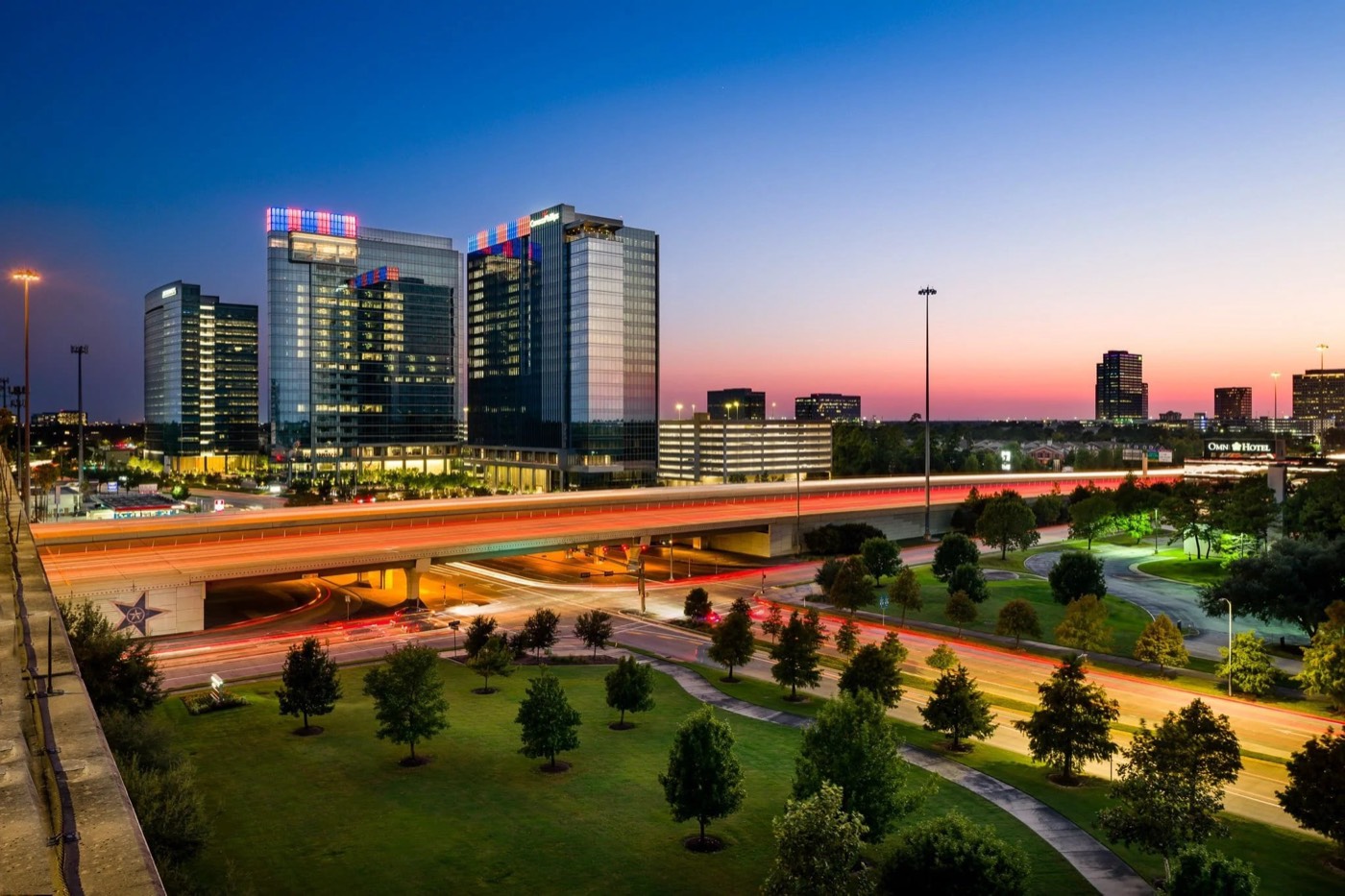
Downtown Houston commercial rooftops

For a facility manager running a plant near the Houston Ship Channel, this resistance translates into fewer premature flashing failures around exhaust stacks and curbs, and a membrane that does not have to be patched and re-patched where grease lines run to rooftop units. We detail those penetrations with the same KEE material so the most chemically exposed parts of the roof get the same protection as the field.

How We Install KEE Membrane in Houston

A KEE roof only performs if the assembly underneath it is sound and the seams are welded correctly. We start every project by evaluating the existing deck, insulation, and drainage. On the wet, humid Gulf Coast, trapped moisture in old insulation is a constant finding, so we confirm what is dry and what has to come out before any new membrane goes down. Roofs that took on water during Harvey or in the heavy rain events that follow most hurricane seasons frequently hide saturated insulation that will rot a new roof from below if it is left in place.

Houston Energy Corridor commercial buildings

From there we tailor the attachment method to the building and the wind exposure. Mechanically fastened systems anchor the membrane through the insulation into the deck and install quickly over large areas. Fully adhered systems bond the sheet to the substrate for a smooth finish and strong uplift performance. Houston sits in a hurricane-exposed wind zone, so we specify fastening patterns and perimeter detailing that account for the elevated uplift pressures along edges and corners, where most wind damage begins.

Tear-off or recover decision based on the moisture and condition of the existing assembly

Insulation and cover board selected for thermal performance and a sound welding surface

Roof planning notes

Roof Scope Notes

Talk with a Houston commercial roofing team

Drainage and Detailing That Survive Houston Rain

Hot-air welding of all seams with verified weld quality, then membrane-clad detailing at curbs, drains, and penetrations Rainfall here arrives in volume. A stalled tropical system or a slow-moving summer storm can drop several inches in hours, and a flat roof that cannot move that water becomes a ponding and leak risk fast. We treat drainage as part of the roof system, not an afterthought. That means confirming positive slope to drains, adding tapered insulation crickets where water stalls behind curbs and equipment, and making sure roof drains and overflow scuppers are sized to clear the kind of downpours Harris County sees every wet season.

Is KEE the Right Roof for Your Building?

Every transition is a potential leak, so we focus on the details that fail first: parapet walls, pipe penetrations, HVAC curbs, and the perimeter edge. KEE membrane is well suited to this detailing because the same heat-weldable sheet wraps these features into a monolithic system with no reliance on caulks and sealants that dry out and split under Texas sun. Done right, the field and the flashings age together instead of the seams quitting years before the membrane does. Talk with a Houston commercial roofing team