

Skip to content

PVC membrane roofing for Houston commercial roofs. Welded, reflective single-ply built for Gulf Coast heat, grease and chemical exposure, and heavy rain.

Schedule a Roof Review

  • PVC Membrane Roofing for Houston Commercial Properties
  • PVC single-ply has been waterproofing flat and low-slope roofs for decades, and it remains one of the most dependable choices for Houston commercial buildings that need a hot-air-welded, chemically tough membrane. The strength of PVC is its seam: when two sheets are welded with hot air, the overlap fuses into a single continuous material that is as strong as the membrane itself. There is no adhesive or tape to peel, and no caulk joint to fail. For a building owner who wants leaks to stay solved, that welded watertight seam is the whole argument.
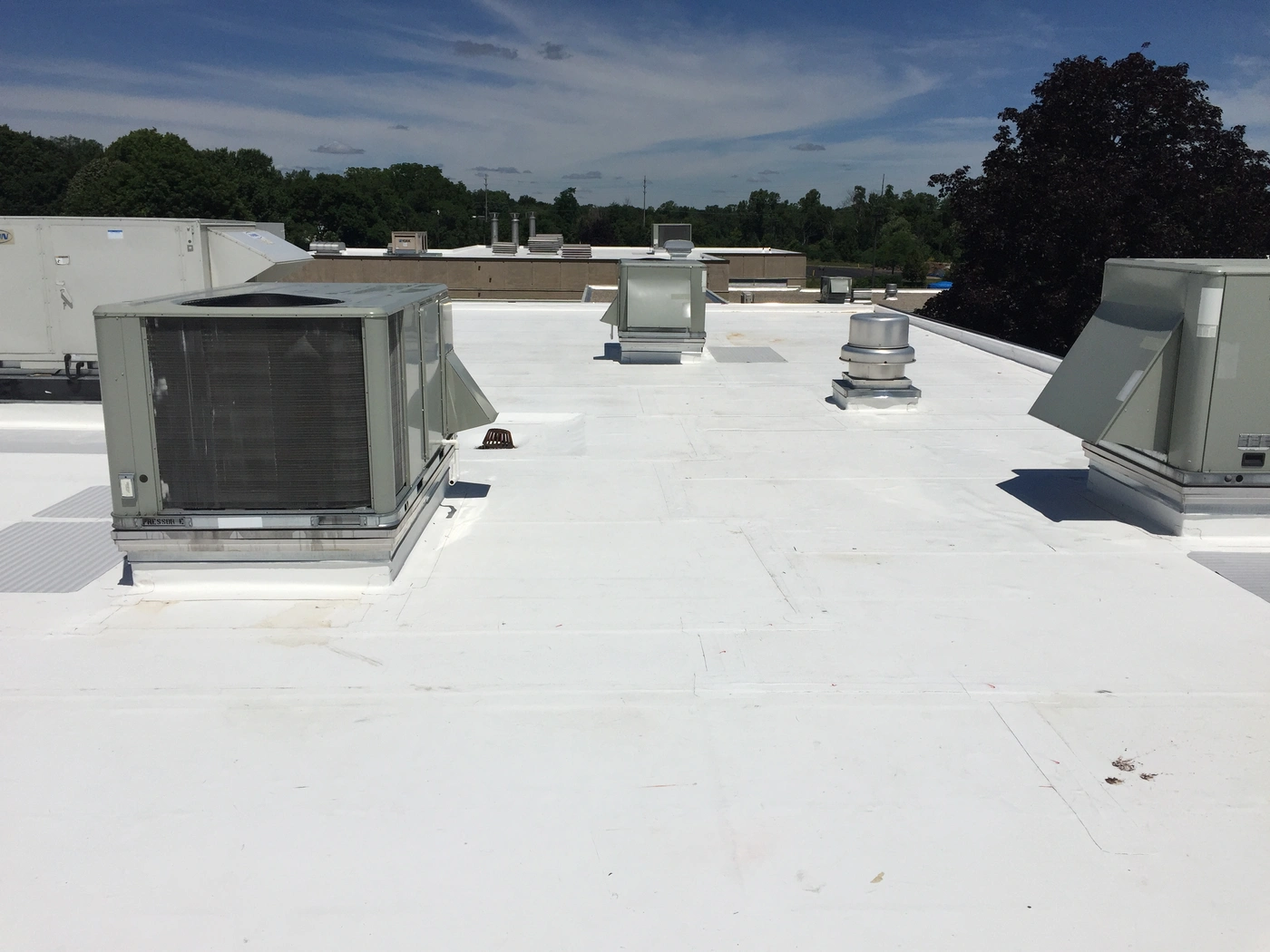
  • We install PVC across the building types that dominate this metro: distribution and warehouse space along the Beltway 8 and I-10 corridors, office and retail roofs around Westchase and the Galleria, restaurants and commissaries with grease-laden exhaust, and manufacturing facilities near the Port of Houston. The membrane's reflective white surface and chemical resistance make it a practical match for the Gulf Coast environment and for the rooftop equipment that loads these roofs.
  • Built for Houston Heat and Sun
  • A reflective PVC roof addresses the single biggest stress on a roof in this climate, which is solar heat. From late spring into October, dark roof surfaces climb to punishing temperatures, drive up cooling costs, and accelerate the aging of every layer of the assembly. A white PVC membrane reflects a large share of that solar energy instead of absorbing it, so the deck runs cooler, packaged HVAC units that work hard through a Houston summer get some relief, and the daily expand-and-contract cycling that fatigues seams and flashings slows down.
  • PVC formulations made for roofing also carry UV stabilizers and enough plasticizer to stay flexible under sustained sun. We pair the membrane with the right cover board and detailing so the reflective performance is matched by a sheet that will not get brittle and crack where the building flexes. On a large warehouse roof, the cooler surface pays back in both lower energy bills and a longer service life before the next reroof.
  • Reflective white surface that lowers rooftop temperatures and reduces summer cooling load
  • Hot-air-welded seams that create a continuous waterproof barrier with no adhesives or tapes to fail
  • Fire performance that suits commercial and industrial occupancies

Roof planning guidance

Long, proven track record on low-slope roofs across a wide range of building types Grease and Chemical Resistance PVC's resistance to grease, fats, and many chemicals is a major reason we specify it on restaurants, commissaries, food-processing plants, and industrial buildings. Kitchen exhaust deposits animal fat and cooking oils onto the roof around vent hoods, and those oils destroy membranes that are not formulated to resist them. On the industrial east side and through the Ship Channel petrochemical belt, rooftop process exhaust and airborne emissions attack ordinary roofing the same way. PVC stands up to this exposure far better than asphalt-based systems and better than standard non-vinyl membranes.

Schedule a roof review
PVC Membrane Roofing Houston, TX | Commercial PVC Roof Systems
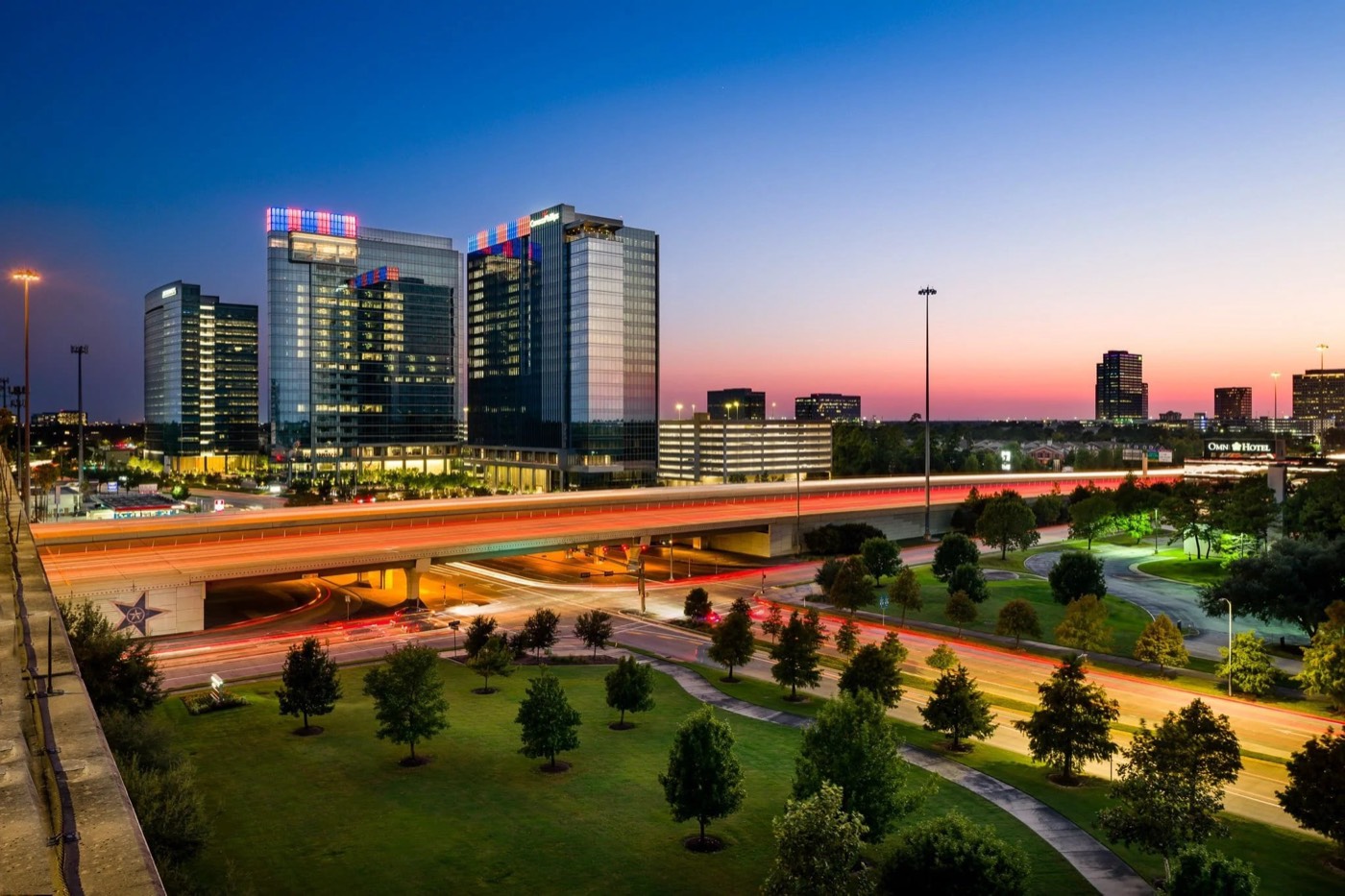
Downtown Houston commercial rooftops

We carry that resistance into the details. The penetrations near grease exhaust and chemical stacks take the most punishment, so we flash those curbs and pipes with PVC-clad accessories and weld them into the field. That way the parts of the roof under the heaviest chemical load are protected by the same tough material as the rest of the surface, instead of relying on sealants that break down quickly under both chemicals and Texas sun.

Standing Up to Storms and Heavy Rain

Houston roofs have to absorb extremes. Hurricane season brings high winds and uplift pressure off the Gulf, and the rain events that follow most storms drop water faster than marginal drainage can move it. The 2017 Harvey flooding underscored how much volume a stalled system can deliver. A PVC roof handles these conditions when it is designed and attached for them, and that design work is where we focus.

Houston Energy Corridor commercial buildings

Wind uplift fails at edges and corners first, so we specify enhanced fastening and perimeter detailing for Houston's hurricane-exposed wind zone. For drainage, we confirm positive slope to drains, build tapered crickets to break up ponding behind curbs and equipment, and size drains and overflow scuppers for the downpours Harris County regularly produces. Standing water is not just a nuisance on a flat roof, it adds weight, finds the weakest seam, and shortens membrane life, so eliminating it is part of every PVC system we install.

Enhanced edge and corner fastening engineered for Gulf Coast hurricane wind exposure

Positive slope verified and tapered crickets added to clear ponding water

Roof planning notes

Roof Scope Notes

Talk with a Houston commercial roofing team

Welded, membrane-clad flashings at parapets, curbs, drains, and penetrations

How We Install PVC Membrane Every reroof starts with what is underneath. On the humid Gulf Coast, old insulation often holds trapped moisture, and roofs that took on water in past storms commonly hide saturated layers that will rot a new system from below. We evaluate the deck, the insulation, and the existing membrane first, then decide between a full tear-off and a recover based on what we find. We do not weld a new PVC roof over wet substrate.

Is PVC the Right Membrane for Your Roof?

We match the attachment method to the building. Mechanically fastened PVC installs efficiently over large warehouse and industrial areas and anchors the membrane through the insulation into the deck. Fully adhered PVC bonds the sheet down for a clean appearance and strong uplift resistance, which suits more exposed or higher-profile roofs. Across both methods, every seam is hot-air welded and the weld quality is checked, because the welded seam is what makes a PVC roof watertight in the first place. Talk with a Houston commercial roofing team