
Skip to content

Healthcare Facility Roofing in Houston, TX

Schedule a Roof Review

  • Roofing for healthcare facilities in Houston
  • Houston is home to the Texas Medical Center, the largest medical complex in the world — a dense campus of hospitals, research institutes, and clinical buildings drawing patients from across the country. Spreading out from it is one of the deepest healthcare building stocks anywhere: hospital systems with suburban campuses across Harris County, freestanding emergency centers, surgical and imaging centers, dialysis clinics, and the medical office buildings clustered along every major corridor. We roof these buildings, and we treat the roof of a healthcare facility as what it is — a critical part of an environment where a leak is never just a maintenance issue.
  • What sets healthcare roofing apart is the stakes underneath the deck. Below a hospital roof are operating rooms, sterile supply, imaging suites with equipment worth more than the building, pharmacy storage, and patients who can't be moved. A roof leak over those spaces can shut down a procedure room, threaten a sterile field, or — through the moisture it leaves behind — create the conditions for mold growth that an immunocompromised population cannot be exposed to. Our work on these roofs is tuned to preventing that outcome, not just responding to it.
  • Infection control governs the whole job
  • The single biggest difference between roofing a hospital and roofing a warehouse is infection control. Healthcare construction is governed by infection-control risk assessment, and roof work that disturbs the deck, runs near intakes, or sends vibration and dust into the building below has to be planned around it. We coordinate with a facility's infection prevention and engineering staff before mobilizing, and we build our methods to match the risk-mitigation measures a project calls for.
  • The reason it matters comes down to two things hail and rain leave behind: airborne dust and trapped moisture. Disturbing an old roof releases particulate that, if it reaches a sterile or immunocompromised area, can carry the fungal spores associated with serious healthcare-acquired infection. And water that gets past a roof during construction doesn't just stain a ceiling tile — it soaks insulation and assemblies that then become a breeding ground for mold inside the building envelope. In an ordinary commercial building those are nuisances. In a hospital they are patient-safety events, and the entire job is organized to prevent them rather than clean them up afterward.
  • Containment and dust control. We keep debris contained and protect the spaces below, because dust from a roof tear-off cannot be allowed to reach patient-care or sterile areas.
  • Air-intake protection. Rooftop HVAC intakes pull outside air straight into the building. We identify them, protect them, and sequence work — and any odor-producing materials like hot asphalt or adhesives — so nothing harmful is drawn into patient areas.
  • Vibration- and noise-aware sequencing. Fastening and demolition over operating rooms, imaging suites, and patient floors are scheduled around clinical operations, with the most disruptive phases timed to avoid sensitive procedures.

Roof planning guidance

Controlled access and badging. Crews follow the facility's access, badging, and security requirements, with routes and lay-down areas planned to keep construction traffic away from patients, families, and clinical staff. A roof that simply does not leak Reliability is the whole point of a healthcare roof, and Houston's climate makes reliability hard to come by. The Gulf Coast delivers a year-round assault: heavy rain and an active June-through-November hurricane season, wind uplift that tests every seam and edge, large spring hail, and a relentless heat-and-UV load that ages membranes faster than a milder climate would. Hurricane Harvey in 2017 showed the whole region what extreme rainfall does to a building, and healthcare facilities are exactly the buildings that have to ride out the next one without taking water. We design and install healthcare roofs for that environment, with redundancy and detailing that account for what actually fails roofs here.

Schedule a roof review
Healthcare Facility Roofing in Houston, TX
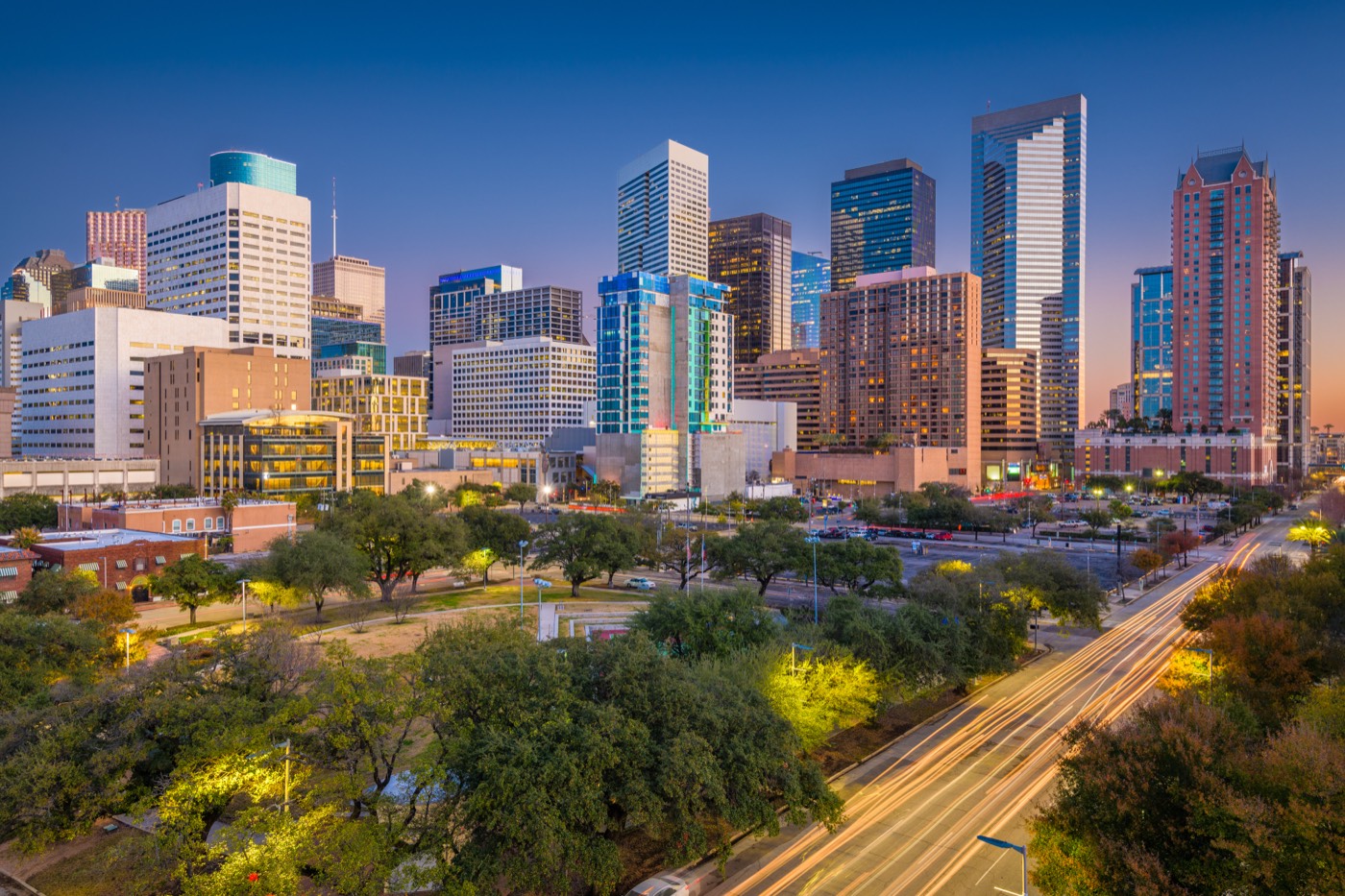
Downtown Houston commercial rooftops

How we build for water-tightness

Redundant, proven assemblies. Multi-ply modified-bitumen and high-quality single-ply systems chosen for the long-term, leak-free performance a critical facility needs, not the lowest first cost.

Meticulous flashing and penetration detailing. Hospital roofs are crowded with HVAC curbs, exhaust stacks, medical-gas vents, and conduit. Every penetration is a potential leak, and we detail each one for the long haul.

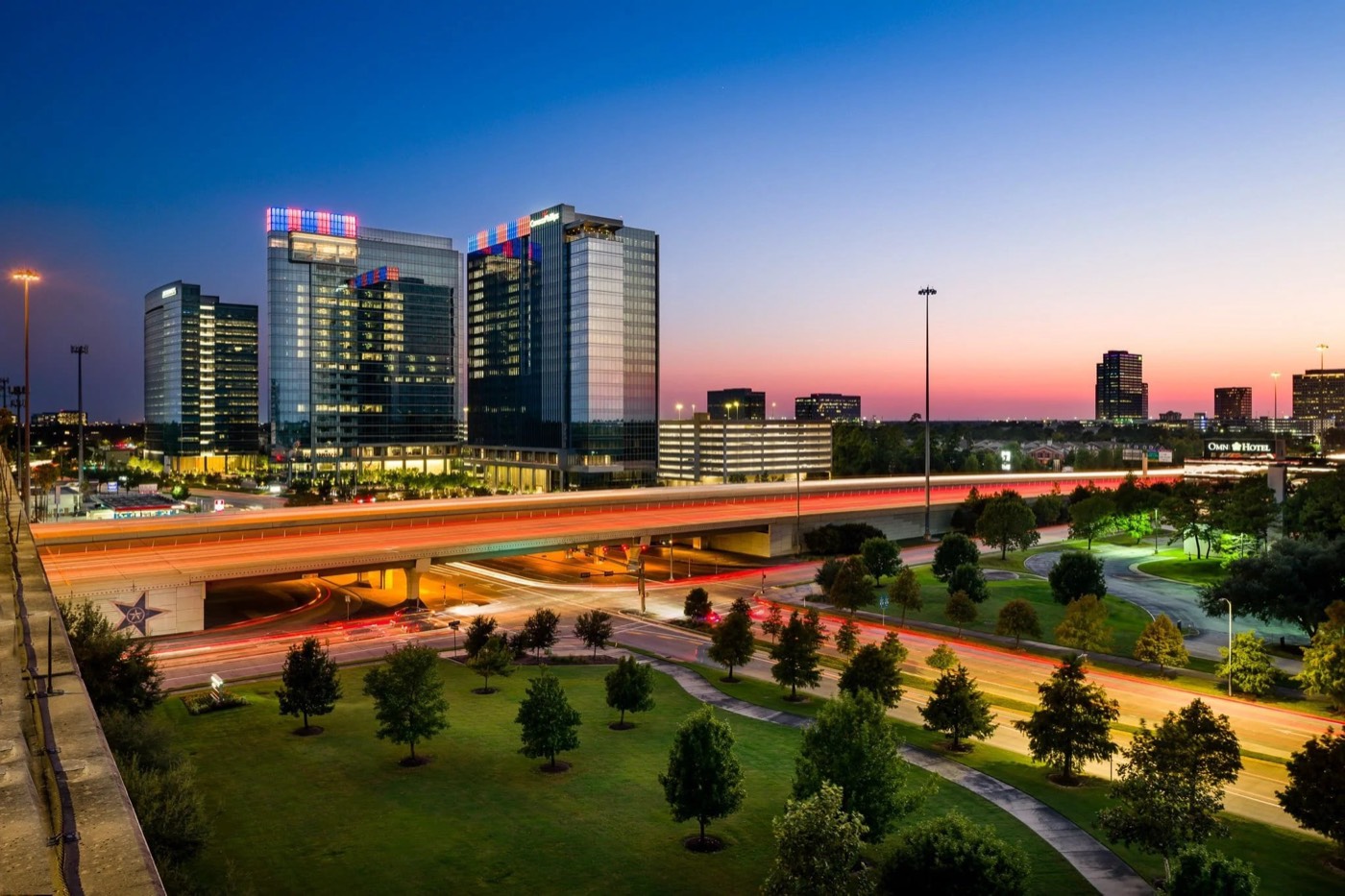
Houston Energy Corridor commercial buildings

Drainage that clears a Gulf Coast downpour. Positive drainage, tapered insulation to eliminate ponding, and properly sized drains, scuppers, and overflows so an extreme rain event runs off instead of pooling over a critical space.

Wind-rated attachment. Membrane and edge-metal attachment specified to the uplift pressures at the building's height and exposure, with reinforced perimeter and corner zones where hurricane-force wind concentrates.

Energy performance over a long cooling season

Roof planning notes

Roof Scope Notes

Talk with a Houston commercial roofing team

Restoration to defer disruption

The least disruptive roof project on a hospital is the one that doesn't require a full tear-off. Where an existing healthcare roof is structurally sound and dry beneath the surface, a restoration coating system can renew water-tightness and reflectivity, extend service life, and often carry a renewed manufacturer warranty — all with far less dust, noise, and open deck than a replacement. For an occupied clinical building, that reduction in disruption is a clinical benefit, not just a cost saving. We assess honestly whether a roof is a candidate for restoration or whether it has reached the point where replacement is the responsible choice, and we never recommend coating over a roof that's already failing underneath. Facilities we serve