

Skip to content

Hotel Roofing in Houston, TX

Schedule a Roof Review

  • Hotel and Hospitality Roofing in Houston
  • A hotel roof has a harder job than almost any other commercial roof, because the building underneath it never closes. A leak over a guest room isn't a maintenance ticket; it's a refunded night, a bad review, and a room out of inventory during a citywide convention. We work on hospitality roofs across the Houston metro with that reality front and center, from limited-service properties along the Katy Freeway to full-service hotels near the Galleria and the Texas Medical Center, where a steady stream of patients, families, and medical travelers keeps occupancy high year-round.
  • Houston's hotel market is concentrated in exactly the places where roof demands are toughest. Properties cluster around the convention business downtown, the energy economy in the Energy Corridor and Westchase, the airports, and the medical center. These are tall, occupied, equipment-heavy buildings sitting in a climate that is hard on roofs. That combination is what we plan around.
  • What Makes Hotel Roofs Different
  • Roofing a hotel is as much a logistics problem as a construction problem. The membrane and detailing matter, but so does how you get materials onto the roof of an occupied high-rise without disrupting the guest experience underneath.
  • Continuous occupancy: There is no overnight shutdown to work around. The roof has to stay watertight at the end of every single work session, with no exceptions.
  • Guest experience: Noise, odor from adhesives and hot work, crane and hoist activity, and blocked rooftop amenities all touch the guest. We plan sequencing, staging, and low-odor materials specifically to protect it.
  • Dense rooftop equipment: Hotels carry heavy HVAC loads, kitchen exhaust, makeup-air units, and often pool and laundry equipment. Every curb, every penetration, and every condensate line is a place a roof can leak, and there are a lot of them.
  • Brand and inspection standards: Franchise property improvement plans and routine inspections put the roof on a schedule. We can work to brand requirements and document the condition for ownership and management.

Systems We Install on Hospitality Properties

For the flat and low-slope roofs typical of Houston hotels, we most often recommend reflective single-ply membranes. A white TPO or PVC roof pushes back against the intense, near-year-round Gulf Coast heat and UV, which lowers cooling load on a building that is air-conditioning hundreds of rooms at once. PVC in particular stands up well to the kitchen grease and exhaust that surround a full-service hotel's rooftop. Where a property has plaza decks, balconies, or amenity areas, we install the appropriate waterproofing for traffic-bearing surfaces so the spaces guests actually use stay dry. For the parts of a hotel that are pitched or visible from the street, the aesthetic matters because the roof is part of the building's first impression. We handle those areas with materials and detailing that hold up to wind and sun while keeping the property looking like somewhere a guest wants to stay.

Schedule a roof review
Hotel Roofing in Houston, TX
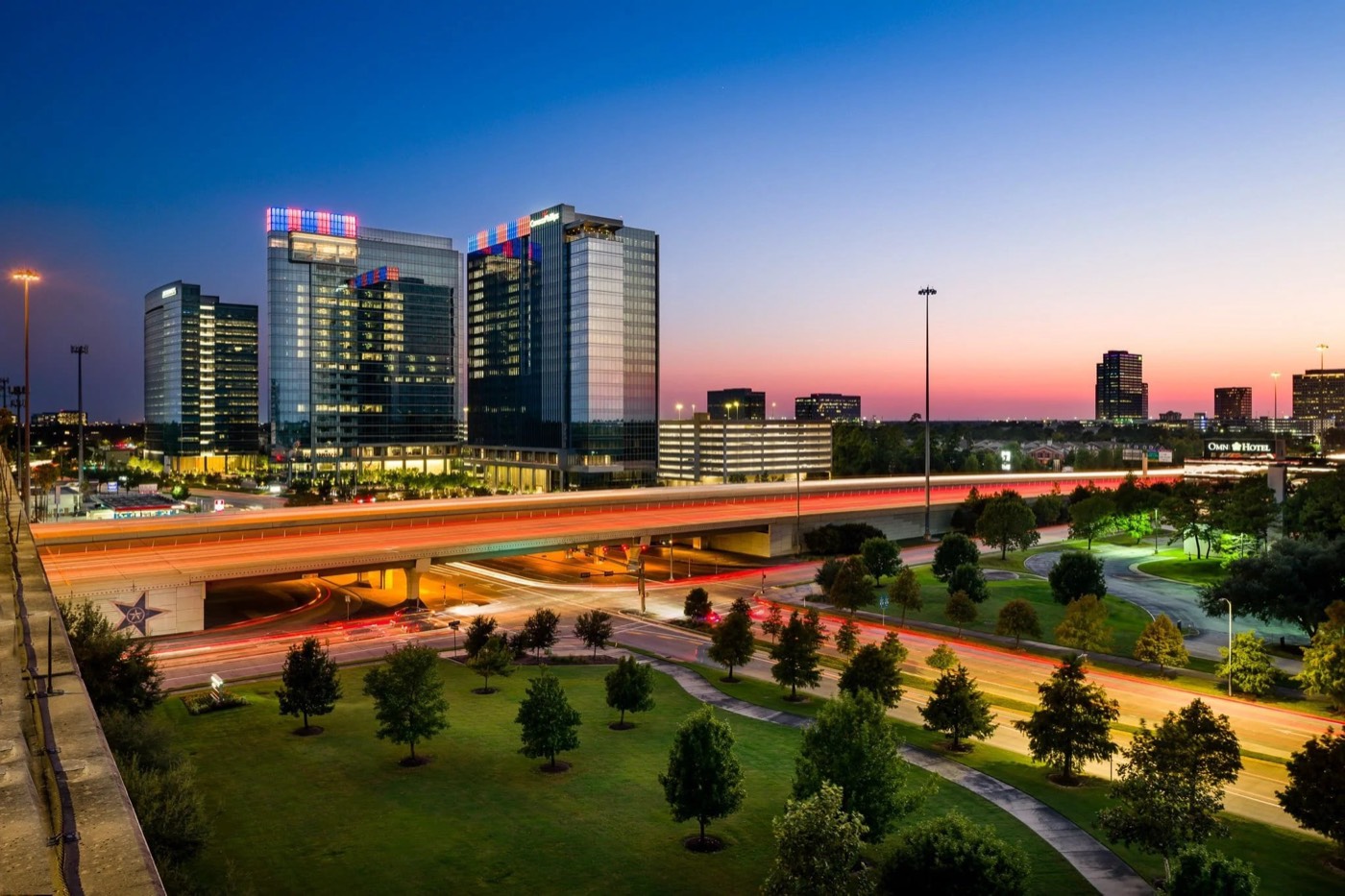
Downtown Houston commercial rooftops

Drainage, Heat, and the Gulf Coast Climate

The same weather that fills Houston hotels with displaced and traveling guests is what wears their roofs out. Heavy rain events test drainage hard, and a hotel roof crowded with equipment curbs has a lot of places for water to pond if slope and drains aren't right. Standing water over occupied rooms is a problem we take seriously, so we confirm positive drainage, clean and protect drains and scuppers, and address ponding rather than living with it. Harris County's drainage expectations and the sheer volume of rain this region absorbs mean a hotel roof has to move water decisively, not just resist it.

Heat is the slower threat. Intense UV degrades membranes and bakes sealants at penetrations, which is exactly where hotels have the most penetrations. Reflective surfaces and a real maintenance program extend roof life and keep cooling costs down, and on a building running AC twenty-four hours a day, that adds up.

Houston Energy Corridor commercial buildings

Low-Disruption Scheduling

We build the work schedule around the hotel, not the other way around. That can mean staging deliveries and noisy work during lower-occupancy windows, protecting and routing around amenity decks and pools, coordinating crane lifts of new equipment or materials with property management, and keeping crews and debris off the paths guests use. We coordinate closely with the general manager and chief engineer so housekeeping, the front desk, and event staff aren't blindsided by what's happening overhead. A re-roof that the guests barely notice is the goal, and it's achievable with planning.

Maintenance That Protects Revenue

Roof planning notes

Roof Scope Notes

Talk with a Houston commercial roofing team

Leak Response When It Counts

When a leak does show up over occupied space, response time is everything. We treat hotel leaks as the urgent problems they are, locating the source rather than chasing the stain, and getting the room or block back into service as quickly as a sound repair allows. A leak that travels through the structure can surface floors below where it started, so we trace it back to the actual breach instead of sealing the symptom and waiting for it to return. That difference is what keeps a single wet ceiling from becoming a recurring problem that takes rooms offline week after week. Re-Roofing an Occupied High-Rise

Let's Look at Your Property

Tearing off and replacing the roof of a tall, full hotel is a different job than re-roofing a single-story building, and the height changes everything about material handling. Getting old roofing down and new materials up means crane lifts or hoisting that has to be choreographed around the property's entrances, drive lanes, and guest traffic. We plan staging areas that don't eat into parking or valet operations, schedule lifts for the least disruptive windows, and keep the work zone secured so nothing from the roof reaches the ground where people are. Tear-off also exposes the deck, which is the moment to find and correct any structural or insulation problems that have been hiding under an old assembly before the new roof goes on top of them. Talk with a Houston commercial roofing team