
We verify the deck can carry the added weight of a recover assembly.
We map drainage, because Harris County drainage expectations and ponding both bear on how the new insulation is sloped and tapered. Tapered insulation and drainage
Three local realities push insulation and recovery board from a nice-to-have to a necessity. Hail. Greater Houston sits in a corridor that takes damaging hail nearly every spring. A membrane backed by a rigid cover board resists puncture from hail far better than the same membrane laid over compressible insulation alone. Many insurers recognize this, and the right substrate can affect how a roof holds up to a claim. Heat and cooling cost. With high temperatures running from spring into October and humidity that keeps air conditioning working overtime, the R-value of the roof assembly is a year-round line item. Adding insulation thickness during a recover or replacement is the cheapest time to improve the building's thermal envelope.
Schedule a roof review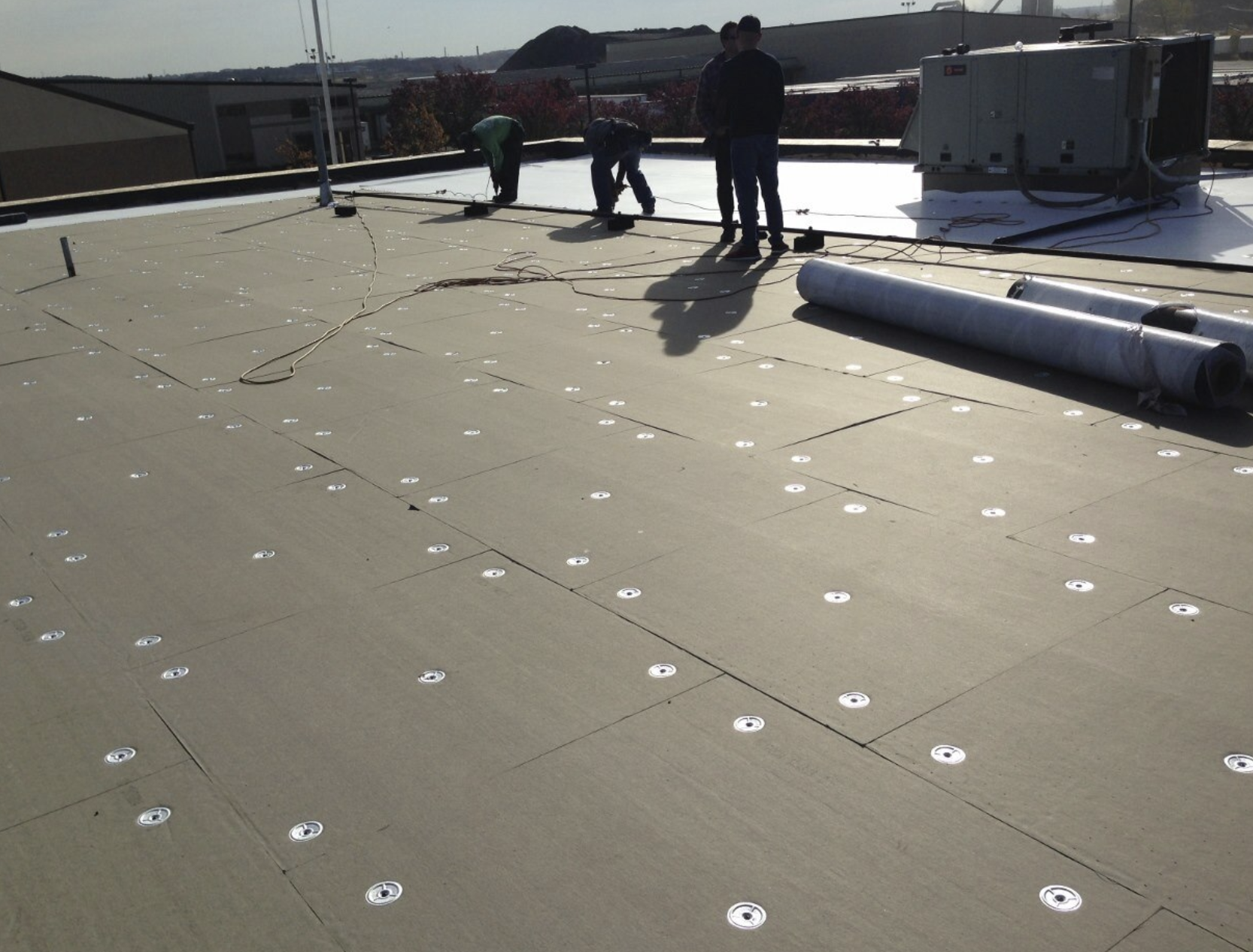

Recover versus tear-off
One of the most useful things a recovery board enables is a roof recover. When an existing roof is at the end of its membrane life but the deck and much of the insulation are still sound, we can sometimes install a new cover board and membrane directly over the old system rather than tearing everything down to the deck. That avoids the disruption, dumpster cost, and exposure risk of a full tear-off, and it keeps the building dry through the work.

How we evaluate an existing assembly
We core the roof to confirm the number of existing layers and the deck type.
Roof planning notes
We map drainage, because Harris County drainage expectations and ponding both bear on how the new insulation is sloped and tapered. Tapered insulation and drainage
Flat is never truly flat, and standing water is the enemy of a commercial membrane. Ponding accelerates aging, breeds growth, and adds dead load. Where a roof drains poorly, we design a tapered insulation layout that builds positive slope toward drains and scuppers using the insulation itself. On a region that sees the kind of sustained, heavy rainfall that came with Hurricane Harvey in 2017, moving water off the roof quickly is not a detail to leave to chance. Tapered systems are engineered to a slope, usually a quarter inch per foot or better, and we lay out crickets to break up large fields and steer water around curbs and equipment. Talk with a Houston commercial roofing team