

Skip to content

Kee Single Ply Roofing in Houston, TX

Schedule a Roof Review

  • KEE single-ply membrane is what we reach for when a building owner wants the welded-seam reliability of a thermoplastic roof but with a membrane that stays flexible and watertight far longer than a standard product. KEE stands for Ketone Ethylene Ester, a solid plasticizer engineered into the membrane that does not migrate or evaporate out over time the way the liquid plasticizers in older single-ply roofs can. For flat and low-slope commercial roofs across Greater Houston that have to endure relentless heat, UV, and Gulf storms, that longevity is the whole point.
  • What makes KEE different
  • Every thermoplastic single-ply membrane depends on plasticizers to stay pliable. In conventional formulations those plasticizers are liquid, and over years of sun and heat they slowly leach out. As they go, the membrane stiffens, shrinks at the edges, and grows brittle until it cracks and the seams pull. KEE membranes replace that liquid plasticizer with a high-molecular-weight solid that is locked into the sheet. It cannot evaporate or wash away, so the membrane keeps its flexibility decades into its life.
  • That single material change drives the rest of the performance story. A KEE membrane resists the plasticizer migration that ages other single-plies prematurely, stands up to UV and ozone, and shrugs off many chemicals, oils, and pollutants that would attack a lesser roof.
  • Welded seams, not glued ones
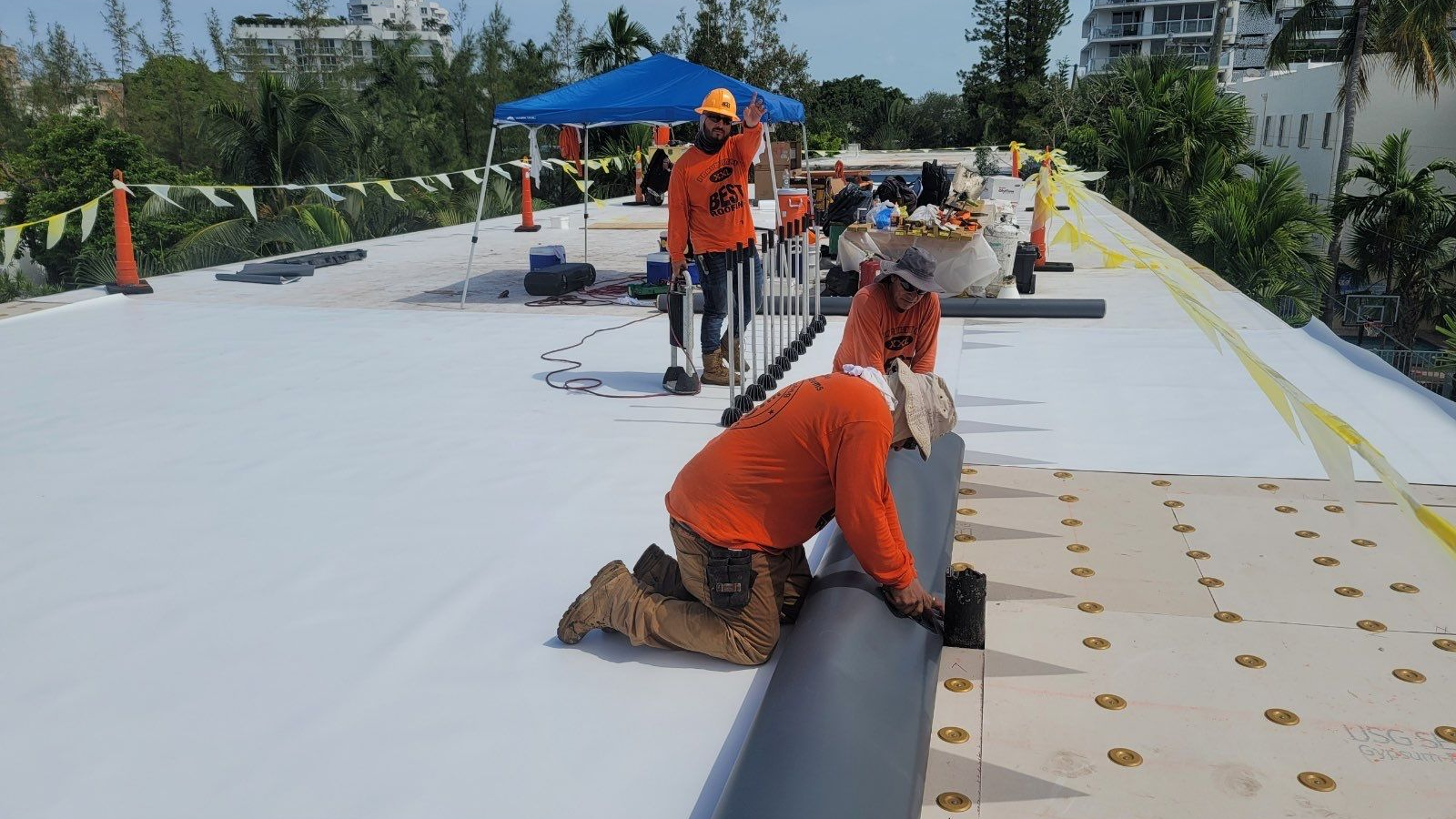
  • KEE is a thermoplastic, which means its seams are hot-air welded rather than taped or glued. A heat weld fuses two sheets into a single monolithic piece of membrane. There is no adhesive to fail, no tape to peel, and the seam is as strong as the field of the sheet itself. On a wind-prone Gulf Coast roof, welded seams are a major advantage, because seam failure is one of the most common ways a single-ply roof lets go in a storm. We weld every seam with calibrated equipment and probe-test them to confirm a continuous, complete bond.
  • Why KEE fits Houston commercial buildings
  • The local climate is rough on single-ply roofs, and it punishes the cheaper ones first.
  • Heat and UV. High temperatures from spring into October and strong year-round sun cook a roof membrane and accelerate plasticizer loss. KEE's locked-in plasticizer and UV resistance are built for exactly this exposure, and a reflective KEE surface bounces solar heat back to ease the cooling load that dominates utility bills here.

Roof planning guidance

Wind uplift. Hurricane season runs June through November, and the wind that comes off the Gulf attacks edges, corners, and seams. Welded KEE seams and proper edge detailing give the assembly the uplift resistance it needs. Chemical exposure. Roofs near the Port of Houston, along the Ship Channel industrial belt, and on facilities venting kitchen grease or process exhaust take chemical and oil contact that degrades ordinary membranes. KEE's chemical resistance is a genuine reason to choose it for industrial roofs in these corridors. Heavy rain. Gulf Coast downpours and the kind of sustained rainfall Hurricane Harvey brought in 2017 test a roof's watertightness. A monolithic welded membrane with no failure-prone adhesive seams keeps water out where it counts.

Schedule a roof review
Kee Single Ply Roofing in Houston, TX
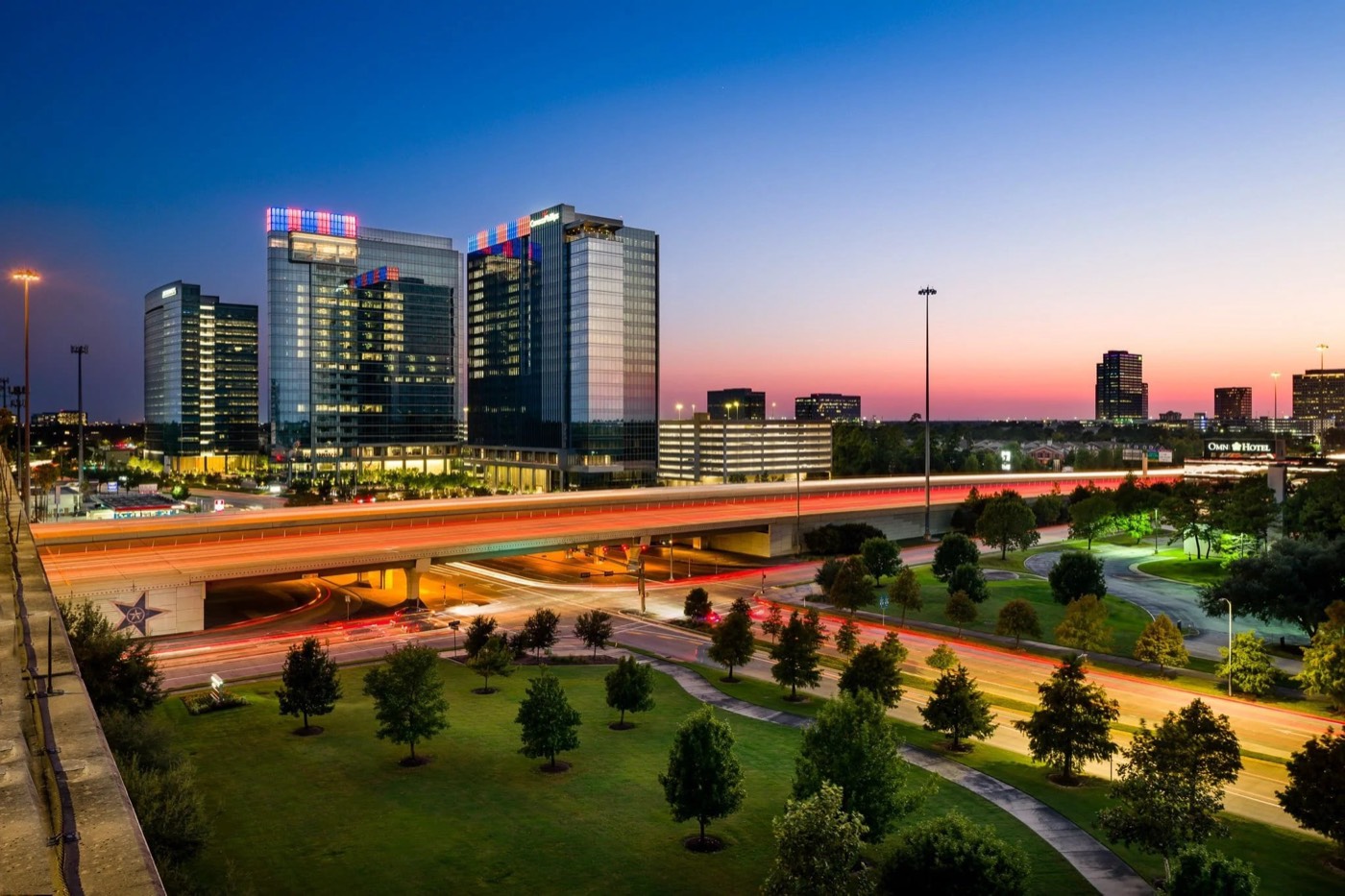
Downtown Houston commercial rooftops

Where KEE makes the most sense

KEE earns its place on buildings where the roof needs to last and the exposure is severe. We specify it often for industrial and manufacturing facilities, distribution and warehouse roofs, restaurants and food-processing operations with grease exhaust, and large institutional and commercial buildings whose owners are planning for the long term rather than the next cycle. On the dense flat-roof inventory around the Energy Corridor, Westchase, and the industrial east side, a membrane that resists both chemicals and heat aging pays for itself by pushing the next reroof years down the road.

Reflectivity and energy

Houston Energy Corridor commercial buildings

KEE membranes are commonly produced in white and other reflective colors that meet cool-roof standards. A reflective roof keeps the building cooler, reduces the burden on the HVAC system through the long cooling season, and reduces the thermal cycling that ages any membrane. In a market where air conditioning runs most of the year, a reflective KEE roof is both an energy decision and a longevity decision.

How we install a KEE roof

The membrane is only as good as the assembly under it and the workmanship that joins it. Our installations follow the steps that make a KEE roof perform for its full service life.

Roof planning notes

Roof Scope Notes

Talk with a Houston commercial roofing team

We attach the membrane to the wind zone of the building, with denser fastening at perimeters and corners where uplift forces concentrate.

We install or verify the insulation and cover board so the membrane has a flat, dry, fire-rated, and uplift-rated substrate. We hot-air weld every seam and probe-test them for a complete bond.

Drainage and detailing

We detail every penetration, curb, drain, and edge, since flashings are where most roofs eventually leak. Talk with a Houston commercial roofing team