Skip to content

Standing Seam Metal Roofing in Houston, TX

Schedule a Roof Review

  • Standing seam metal roofing for Houston commercial buildings
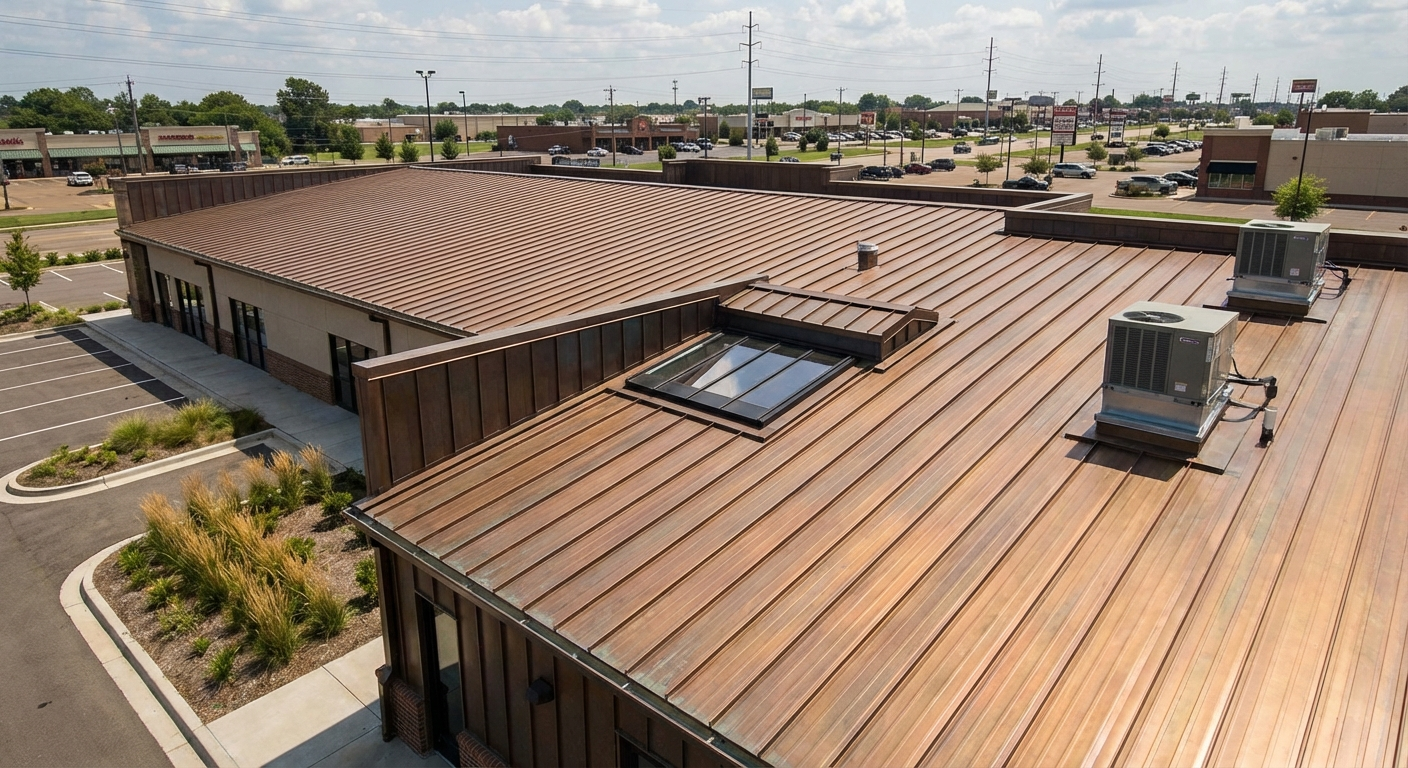
  • Standing seam is the metal roof you specify when you want the building to outlast the people who paid for it. Unlike the exposed-fastener panels that cover most warehouses and metal shops around Houston, a standing seam roof hides its attachment under raised vertical seams that lock or fold together between panels. There are no screws driven through the surface of the roof, which removes the single biggest long-term failure point of cheaper metal systems. We install standing seam on the buildings where appearance and service life both matter: corporate offices in the Energy Corridor, retail and restaurant pads along the major freeway corridors, churches and schools, medical office buildings near the Texas Medical Center, and the entrances, canopies, and mansards that face the street on otherwise flat-roofed commercial properties.
  • It is a more expensive roof than R-panel, and it should be. Done correctly, it is also a roof that can run forty to sixty years through Gulf Coast heat and storm seasons with very little asking of you in return.
  • What makes a seam stand
  • The defining feature is in the name. Each panel terminates in an upturned edge, and adjacent panels are joined at those edges either by mechanically seaming the metal together with a powered seamer or by snapping a snap-lock profile closed. Either way, the joint, the most vulnerable line on any roof, is lifted up off the water plane and sealed above where the water runs. Water sheds down the flat of the pan and never reaches the seam under normal conditions. Compare that to an exposed-fastener roof, where every screw is a hole through the surface sealed only by a rubber washer that the sun eventually destroys, and you understand why standing seam commands the premium it does.
  • The panels themselves are roll-formed from coated steel or aluminum in long, continuous lengths that run unbroken from ridge to eave. On a low-slope commercial run that can mean a single panel covering the entire slope with no horizontal seam at all, eliminating the end laps that are a frequent leak origin on pieced-together roofs.
  • Mechanically seamed versus snap-lock
  • Which seam profile we recommend depends on the slope, the building's exposure, and the wind environment.
  • Mechanically seamed panels are folded closed on site with a seaming machine, producing the tightest, most weather-resistant joint available. We favor these on lower slopes and on taller or more exposed buildings where wind uplift and water performance are the priority, which on the Gulf Coast is most of them.

Roof planning guidance

Snap-lock panels engage by pressing one panel's seam over the next. They install faster and suit steeper slopes and architectural applications like entry canopies and storefronts, where the slope sheds water quickly and appearance is part of the point. The clip system is the whole game What actually holds a standing seam roof to the building is a series of concealed clips fastened to the deck or purlins and engaged into the seam. The smart part is that many clips are designed to float. A standing seam roof has to be allowed to move, and the floating clip lets the panel slide as it expands and contracts while still holding it down against uplift. Get the clip type, spacing, and fastening right and the roof handles both jobs at once. Get it wrong and you either restrict the movement, which buckles panels and tears seams, or you under-resist the wind, which is a conversation no Houston building owner wants to have during hurricane season.

Schedule a roof review
Standing Seam Metal Roofing in Houston, TX
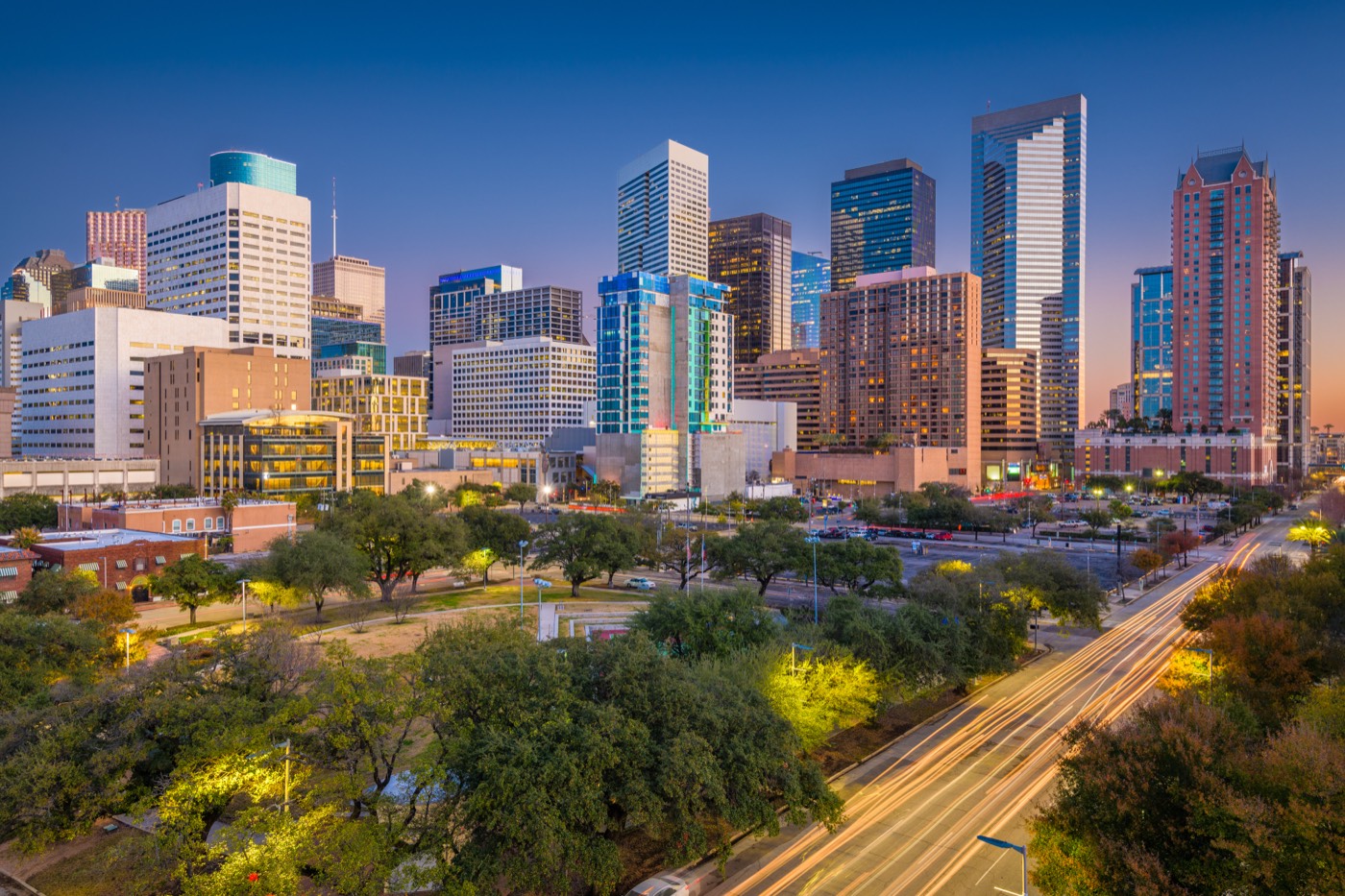
Downtown Houston commercial rooftops

Why thermal movement is not optional here

Metal expands when it heats and contracts when it cools, and a long panel moves a meaningful amount over its length. Houston punishes this harder than most of the country. A dark metal roof surface can reach well over 150 degrees on an August afternoon and then shed that heat overnight, and the panel grows and shrinks with every cycle, day after day, through our long cooling season. A standing seam roof is engineered to absorb that movement through floating clips and properly detailed eave and ridge conditions. A roof that pins the panels down instead, the kind of shortcut that shows up on underbuilt installs, will oil-can, fatigue at the seams, and back out its own fasteners long before its time. We detail for movement from the start because in this climate the metal will move whether the roof was built to allow it or not.

Standing seam against Gulf Coast storms

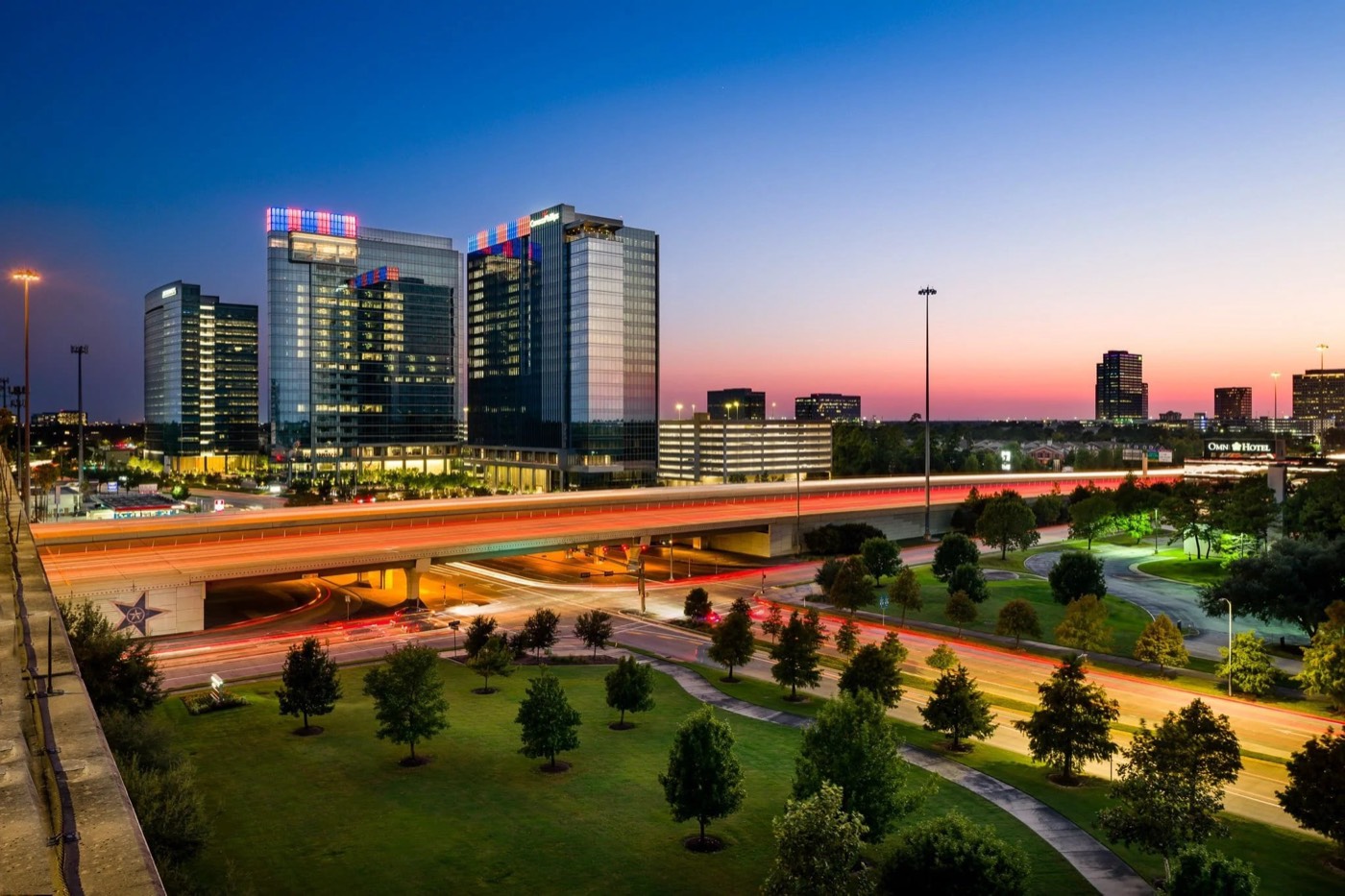
Houston Energy Corridor commercial buildings

From June through November the upper Texas coast sits in the path of hurricanes and severe squall lines, and wind is the threat that defines roof design here. Wind damages roofs at the edges and corners, where uplift suction is highest, and a standing seam roof's performance in that moment comes down to how its clips and perimeter were engineered and fastened. We design the attachment, clip spacing, and edge details to the uplift demand for the building's height and exposure, and we treat the eaves, rakes, and ridge as the critical zones they are, because that is where a metal roof either holds or peels.

Hail is the other Gulf Coast reality. Standing seam in a heavier gauge resists denting far better than thin panels, and even where large hail leaves cosmetic marks, the concealed-fastener seam keeps the roof watertight when an exposed-fastener roof of the same age would be weeping at split washers. And when the rain arrives in the volumes this region is known for, the kind of totals Harvey delivered across Harris County in 2017, a standing seam roof's raised seams and continuous panels are built to move that water off the building fast.

Reflectivity and the cooling bill

Roof planning notes

Roof Scope Notes

Talk with a Houston commercial roofing team

Details that decide the roof

The field of a standing seam roof is the easy part. The roof is won or lost at the transitions, and these are where we spend our attention. Eave and ridge: closures and trim that lock the panel ends down against uplift while still letting the metal move

Roof-to-wall conditions: counterflashing and headwall details at parapets, mansards, and adjoining higher walls

Penetrations: curbs and flashings around HVAC units, vents, and pipes detailed with matching metal so the seal carries the same logic as the panels Talk with a Houston commercial roofing team